 Book a Session
 Individual Therapy
Individual Therapy in Boulder, Colorado
Individual therapy in Boulder can help when anxiety, grief, pressure, or emotional exhaustion are making daily life harder to carry than other people can see.
Adults in Boulder, Colorado can meet online with Courtney Redman, MA, LPC, LMFT for private individual therapy that stays grounded and useful outside the session.
Local overview
When therapy starts to feel worth making room for
It often starts to feel worth making room for when insight is no longer the problem. You already know something feels off, but the anxiety, grief, pressure, or numbness keeps shaping daily life anyway.
Counseling in Boulder can help when you want more than a place to vent. For many adults comparing therapy or individual counseling in Boulder, the work needs to give a clearer understanding of what is happening and a steadier way to respond to it without turning into broad, low-fit self-help language.
Why therapy becomes the next step
This work often becomes the right next move when holding everything together has started to cost too much internally. What looks manageable from the outside can still feel exhausting, brittle, or lonely from the inside. The strain may show up in sleep, concentration, relationships, motivation, or the way even small demands start to feel outsized.
A good therapist in Boulder should help you slow the pattern down, name what is active, and work toward something more useful than just surviving the week. The work should make your inner life less confusing, not more complicated.
Online therapy that still feels personal
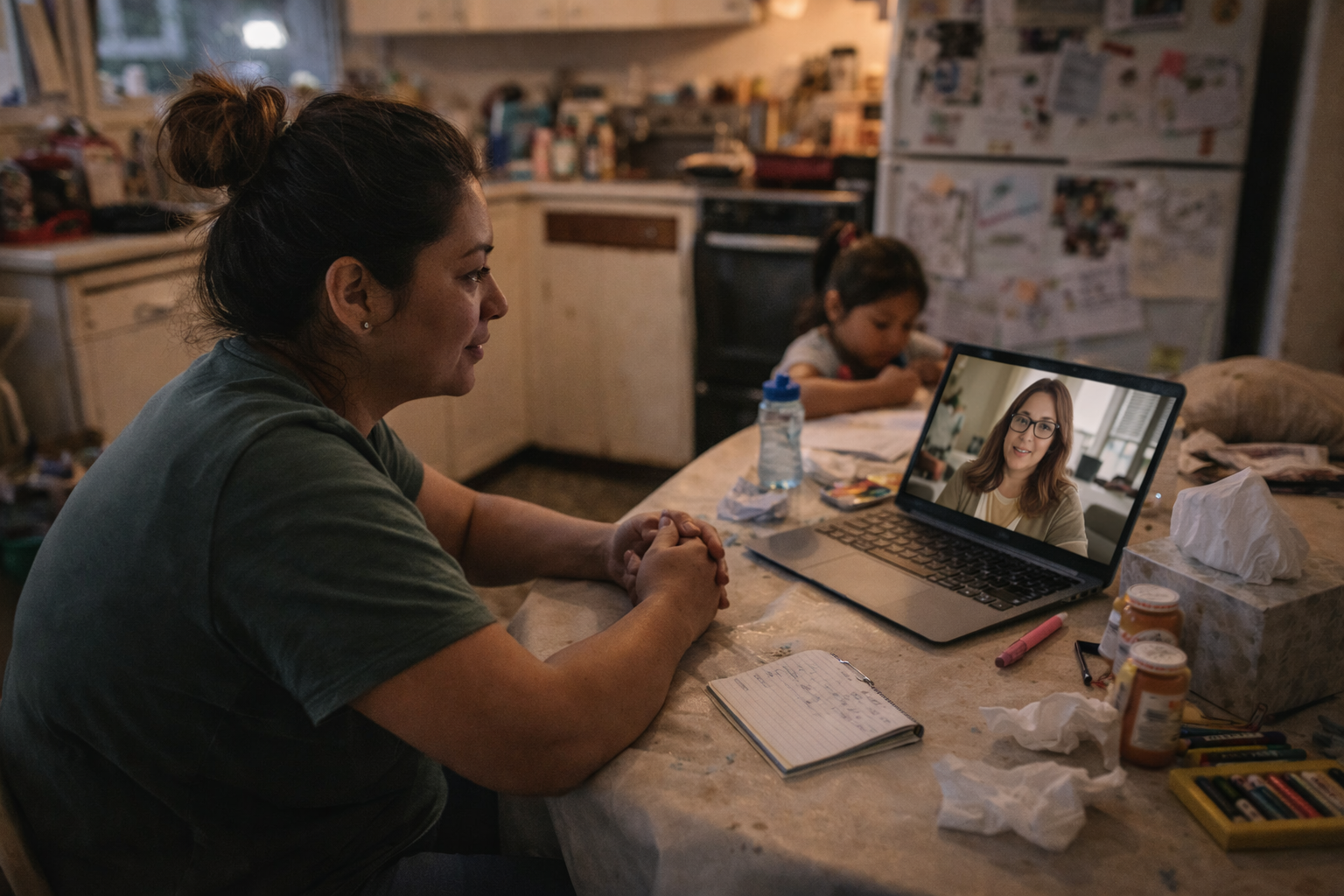
Online therapy in Boulder can make support easier to protect when schedule friction, privacy needs, or sheer mental load have already delayed starting.
The format changes where the conversation happens. It should still feel focused, emotionally present, and specific enough to help once the session ends.
How the work can begin
What a first season of therapy can begin to clarify
Early work often starts with what feels most active right now, what keeps repeating, and what relief would actually look like in real life instead of in theory. That first stretch is usually less about fixing everything quickly and more about understanding what deserves attention first.
That can mean understanding anxiety more clearly, grieving with more support, softening self-criticism, or making daily life feel less controlled by overwhelm. It can also mean finding language for an experience you have been minimizing or pushing past for a long time.
- Name what feels most active, heavy, or hard to hold right now.
- Understand the emotional patterns shaping the struggle.
- Build a steadier sense of what support would help next.

Support in Boulder can help with anxiety, grief, and carrying too much alone
This support in Boulder can help when anxiety, grief, identity stress, overwhelm, or chronic internal pressure are making ordinary life harder to carry than other people can see. It can also help when perfectionism, shame, or emotional exhaustion keep shrinking the room you have to think clearly and respond well.
- Anxiety, overthinking, or internal pressure that keeps daily life feeling too tight.
- Grief, loss, or emotional heaviness that does not stay contained to one part of the week.
- Burnout, overwhelm, or self-criticism that make it harder to function with steadiness.
- Identity stress or life transitions that leave you feeling less clear inside your own life.
What people are usually hoping will change
People usually want emotional life to feel less chaotic, less foggy, and less punishing. This work can support that by making patterns easier to understand and choices easier to make from a steadier place. Often the hope is not to become a different person. It is to feel more like yourself again and less controlled by pressure that never seems to turn off.
- A steadier understanding of what is happening emotionally and internally.
- More workable ways to respond to anxiety, depression, grief, or overwhelm.
- Therapy that feels grounded, human, and relevant to daily life.
What progress often feels like
Progress is not always dramatic. Often it looks like fewer spirals, less internal noise, more honest self-understanding, and more room to respond instead of react. It can show up in the way you speak to yourself, the way you recover after a hard day, or the way difficult feelings stop running the entire week.
It can feel like more room inside the day, less dependence on sheer effort, and more confidence that difficult feelings can be worked with instead of just endured. Sometimes the earliest sign of change is simply not feeling so alone inside your own life.
- A steadier understanding of what is happening emotionally.
- More useful support around anxiety, grief, overwhelm, or depression.
- A clearer sense of what healing and change could look like from here.
How the work stays grounded
The work stays steady, thoughtful, and practical so therapy can help you understand what is happening more clearly and move toward support that feels personal, grounded, and sustainable.
- Keep the tone grounded and practical rather than abstract or overly clinical.
- Let the page hold a broad range of concerns without feeling vague.
- Make online therapy and online-therapist language feel credible and accessible, not secondary.
Where therapy can offer support
This support can help when anxiety, depression, grief, identity stress, or chronic internal pressure are making work, relationships, rest, or self-trust harder than they need to be. Therapy in Boulder can matter whether the stress feels acute and obvious or more like a constant background weight that never fully lets up.
A therapist in Boulder can help sort through what feels urgent, what has been building quietly over time, and what kind of support would make life feel more workable in practice. Individual counseling in Boulder should leave you with a clearer sense of what needs attention first, not just another vague idea of self-improvement.
- Get clearer about what feels most active instead of treating everything like one undifferentiated problem.
- Understand whether the strain is being driven more by anxiety, grief, burnout, identity pressure, or accumulated emotional fatigue.
- Leave with support that still feels usable once work, relationships, and the rest of the week speed back up.
When To Start
How to tell whether this is the right next step in Boulder
For many people in Boulder, therapy starts to make sense when the strain keeps leaking into sleep, focus, relationships, work, or the amount of effort it takes just to get through an ordinary week. It is often less about having the perfect label and more about recognizing that what you are carrying keeps shaping too much of daily life.
A first session should make the problem feel more understandable, narrow what deserves attention first, and show whether the work feels specific enough to trust. Good therapy should help you leave with clearer language, a steadier read on what is happening, and a more grounded sense of what support would actually help next.
- A first session should clarify what feels most active, not blur everything together.
- The work should feel specific enough to daily life to keep using after the appointment ends.
- Good therapy should make the strain more understandable before it tries to solve all of it at once.
What Makes It Workable
What makes support in Boulder easier to keep using
For many people in Boulder, the real question is whether therapy can fit privacy needs, calendar pressure, energy limits, and the shape of an already full week well enough to keep using. The format has to make support more realistic to protect, not more aspirational to think about. If the logistics keep getting in the way, even good therapy becomes something people postpone instead of continue. The right setup should make it easier to show up consistently, stay honest in the work, and keep the support connected to the life you actually have to live between sessions.
Online therapy in Boulder can help with that when the process still feels focused, private, and useful after the appointment ends. The format only earns trust when it still feels specific enough to daily life to keep using after a hard week.
- Online support should feel easy enough to keep on the calendar.
- Sessions should still feel private, direct, and emotionally present.
- The work should stay useful between appointments.
- Consistency matters because therapy usually helps more when you can keep showing up.
Client Testimonials
Care that feels steady, nonjudgmental, and grounded.
Courtney is a wonderful therapist who genuinely cares for her clients. Her curiosity, steadiness, and nonjudgmental presence help people create meaningful change.
Courtney is highly skilled at working with individuals, couples, and families. Her dedication to continued training and thoughtful care shows up in the quality of her work.
Courtney has a remarkable ability to help people feel heard while guiding the work toward greater understanding, connection, and repair.

About Courtney
Support that stays thoughtful, practical, and connected to daily life.
Courtney Redman, MA, LPC, LMFT offers grounded, practical support for people seeking therapy that feels clear, useful, and connected to real daily life.
Her work helps people understand what they are carrying, what patterns may be shaping the struggle, and what kind of change would feel genuinely supportive from here.
FAQ
What kind of therapist do I need?
The right therapist is usually the one whose work matches what feels most active right now. That may mean anxiety, grief, depression, identity stress, overwhelm, or the general pressure of carrying too much alone. A first session can help clarify what kind of support fits best from there.
How do I know if I need therapy?
Support usually becomes worth starting when stress, anxiety, grief, depression, or internal pressure are taking too much out of daily life and it no longer feels useful to keep carrying it alone. A first session can help clarify whether this is the right kind of support from here.
How much does therapy cost?
Cost varies and can range from $160 - $270 per session, depending on session length. Voyance Counseling offers a free 15-minute therapy consultation so you can understand fit, next steps, and cost before committing to ongoing care.
To schedule a free 15-minute therapy consultation, email us at info@voyancecounseling.com.
We offer flexible, personalized care options and can provide superbills for clients who plan to seek insurance reimbursement.
Is online therapy effective?
It can be, especially when the work stays specific, consistent, and honest enough to use outside the session. For many people in Boulder, online therapy becomes easier to protect because it removes one more commute and one more scheduling barrier without making the work feel less direct.
How do I find a therapist?
Look for a therapist whose work clearly matches what feels most active right now. Look for work that sounds specific to anxiety, grief, depression, identity stress, or overwhelm instead of generic support for everything at once.
What can therapy help with?
This work in Boulder can help with anxiety, depression, grief, identity stress, overwhelm, life transitions, relationship strain, and the broader emotional weight of carrying too much alone. The first step is usually getting clearer about what feels most active and what kind of support would actually help.
What is the difference between counseling and therapy?
People often use those terms interchangeably. The more useful question is whether the support feels specific enough to what you are carrying, practical enough to use between sessions, and steady enough to keep returning to.
Serving Boulder, Colorado
Some people begin with counseling in Boulder because they want support that feels close to daily life here, not abstract or far removed from what the week actually looks like. The work should feel connected to the problems you are actually living with, not to a generic idea of self-improvement.
Related Pages
More Individual Therapy Across Colorado
Individual Therapy in Colorado Individual Therapy in Arvada, Colorado Individual Therapy in Aurora, Colorado Individual Therapy in Breckenridge, Colorado Individual Therapy in Capitol Hill, Denver, Colorado Individual Therapy in Castle Rock, Colorado Individual Therapy in Centennial, Colorado Individual Therapy in Cherry Creek, Colorado Individual Therapy in Colorado Springs, Colorado Individual Therapy in Denver, Colorado Individual Therapy in Edgewater, Colorado Individual Therapy in Fort Collins, Colorado Individual Therapy in Fountain, Colorado Individual Therapy in Lakewood, Colorado Individual Therapy in Longmont, Colorado Individual Therapy in Monument, Colorado Individual Therapy in Parker, Colorado Individual Therapy in Thornton, Colorado Individual Therapy in Westminster, Colorado Individual Therapy in Wheat Ridge, Colorado Individual Therapy in Windsor, Colorado
Next step
Start with a clearer next step in Boulder
A first appointment can help clarify what feels most active, what kind of support fits best, and whether therapy in Boulder feels specific enough to keep using once the week gets hard again. Good individual therapy in Boulder should make the next step feel clearer, steadier, and more usable in daily life.
Take the Next Step

Schedule a Session
Book a time that works for you and begin with support that feels clear, grounded, and usable.

Share Your Story
Reach out if you want help figuring out where to begin or what kind of support fits best.

Start your Journey
Attend your initial session to clarify what is bringing you in and identify the kind of support that will be most helpful.